
Stop Guessing at Wound Closure: A Guide to Suture Selection
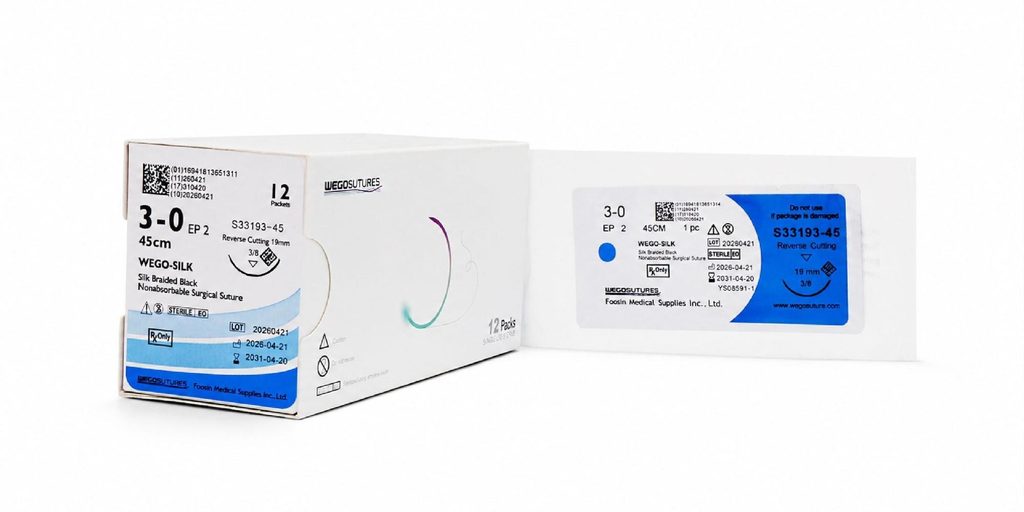
The final step of a surgical procedure often determines how patients remember the experience. A precisely executed osteotomy or a beautifully placed implant can be undermined by closure that heals poorly, dehisces prematurely, or leaves the patient with an inflamed operative site during the critical first week of recovery. Yet closure decisions are frequently made by habit rather than deliberate analysis, with clinicians defaulting to whatever material and needle combination they trained on years ago. Modern practice offers a much wider range of options than most surgeons routinely consider, and matching the right material to the right tissue makes a measurable difference in outcomes. This article walks through the criteria that should actually guide closure decisions, the differences between the major categories of wound closure products, and how thoughtful selection contributes to smoother recoveries and happier patients.
Understanding What Closure Materials Actually Do
Every wound closure product performs the same basic function: approximating tissue edges long enough for biological healing to bridge the gap. But the way different materials accomplish that task varies significantly, and those variations translate into real clinical differences. Absorbable materials degrade through hydrolysis or enzymatic action over predictable timeframes, releasing tension gradually as the tissue takes over structural support. Non-absorbable materials maintain their tensile strength indefinitely and require removal at a scheduled follow-up. Choosing between the two categories starts with an honest assessment of how long the wound will need mechanical support and whether a return visit for removal is practical or desirable. A well-chosen surgical suture matches the healing timeline of the specific tissue being closed rather than defaulting to a general-purpose material.
Absorbable Materials and Their Timelines
Fast-absorbing options based on plain gut lose tensile strength within days and disappear entirely within two weeks, which suits mucosal closures in the oral cavity where rapid healing is expected. Synthetic absorbables such as polyglactin or polyglycolic acid retain strength for two to three weeks and absorb completely within sixty to ninety days, making them appropriate for subcutaneous layers or deeper tissue planes. Longer-term absorbable options such as polydioxanone or poliglecaprone maintain support for weeks longer, which suits fascia or other slow-healing tissue. Matching the material to the tissue turnover rate prevents premature loss of support in slow-healing tissues and unnecessary retained material in fast-healing sites.
Monofilament Versus Braided Construction
The physical construction of the material matters as much as its chemistry. Monofilament materials consist of a single strand of polymer that passes through tissue with minimal friction and offers virtually no interstices for bacteria to colonize. They resist infection more effectively than braided alternatives but handle less pleasantly, with more memory and less secure knot-holding characteristics. Braided materials feel softer, tie more reliably, and conform to tissue contours more easily, but the interstices between individual filaments provide microscopic havens for bacterial contamination.
The decision between monofilament and braided construction should reflect the infection risk of the specific procedure. Clean surgical fields with meticulous asepsis tolerate braided materials without significant infection increase, and the improved handling often outweighs theoretical risks. Contaminated fields, oral surgery in immunocompromised patients, or extraction sites in poorly maintained mouths favor monofilament construction to minimize the bacterial burden that closure materials contribute to the healing environment.
Needle Selection and Its Impact on Tissue Trauma
The needle attached to the closure material influences tissue handling as much as the material itself. Cutting needles feature triangular cross-sections that slice through tough tissue such as skin or attached gingiva. Reverse cutting needles orient the cutting edge outward, reducing tissue tear-out during needle passage. Tapered needles taper smoothly to a point and are designed for soft, easily penetrated tissue such as mucosa or subcutaneous layers. Using a cutting needle in delicate tissue produces unnecessary trauma; using a tapered needle in tough tissue produces frustration and needle deformation.
Needle curvature matters as well. Three-eighths circle needles work well in shallow, accessible closures. Half circle needles suit deeper tissue where the needle needs to rotate through a longer arc. Compound curve needles find application in specific procedures such as periodontal or oral surgical closures where anatomical constraints favor unusual needle geometries. Plovio offers closure sets that pair appropriate needles with matched materials for the most common procedures, which simplifies procurement for practices that would otherwise stock dozens of separate combinations.
Diameter and Its Trade-Offs
Material diameter is measured on the USP scale, where higher numbers represent thinner strands. A 4-0 material is thicker and stronger than a 6-0, and the choice reflects the tension the closure needs to bear. Thicker materials hold more securely but leave larger tract marks and provoke more foreign-body response. Thinner materials heal more cosmetically but risk breakage under tension. Oral surgery typically uses 3-0 or 4-0 for extraction sites and flap closures, moving to 5-0 or 6-0 for cosmetically sensitive areas such as vermillion border repair.
Handling Techniques That Preserve Material Performance
Even the highest-quality closure material can be compromised by poor handling. Grasping the material with instruments in the working length damages the surface and creates weak points that fail under tension. Instruments should engage the material only in the tag portion or on the needle itself, never on the section that will bear healing loads. Excessive tension during knot tying stresses the material beyond its design tolerance and can produce microfractures that fail hours or days later.
Knot security depends on the number and configuration of throws. Different materials require different knotting protocols to maintain security, and monofilaments generally need additional throws compared to braided materials because their smooth surface offers less friction to lock the knot. Practicing knot techniques on simulation models before applying them in patient care builds the muscle memory needed for consistent, secure closures under time pressure during real procedures.
Storage and Shelf Life
Closure materials come in sterile packaging with expiration dates that reflect validated sterility and material properties. Absorbable materials degrade slowly even in unopened packaging, and using expired stock produces closures that lose strength faster than expected. Rotating inventory strictly by expiration date and storing packages away from heat and humidity preserves the properties that manufacturers guarantee when they ship the product.
Closing With Intention Instead of Habit
The materials that close your surgical wounds deserve the same deliberate selection process you apply to your rotary instruments, your imaging equipment, and your implant components. Defaulting to a single material for every case simplifies procurement but sacrifices the outcome improvements that thoughtful matching produces. Practices that expand their closure inventory to include multiple absorbable and non-absorbable options, pair them thoughtfully with appropriate needles, and train their teams on handling protocols see the results in cleaner healing, fewer complications, and patients who describe their recovery in terms that translate directly to referrals. The last step of a procedure is your last chance to influence how well your work heals, and giving it the attention it deserves is one of the most impactful improvements a surgical practice can make.