
SMS Bomber Prank Awareness: What It Is and How to Stay Safe
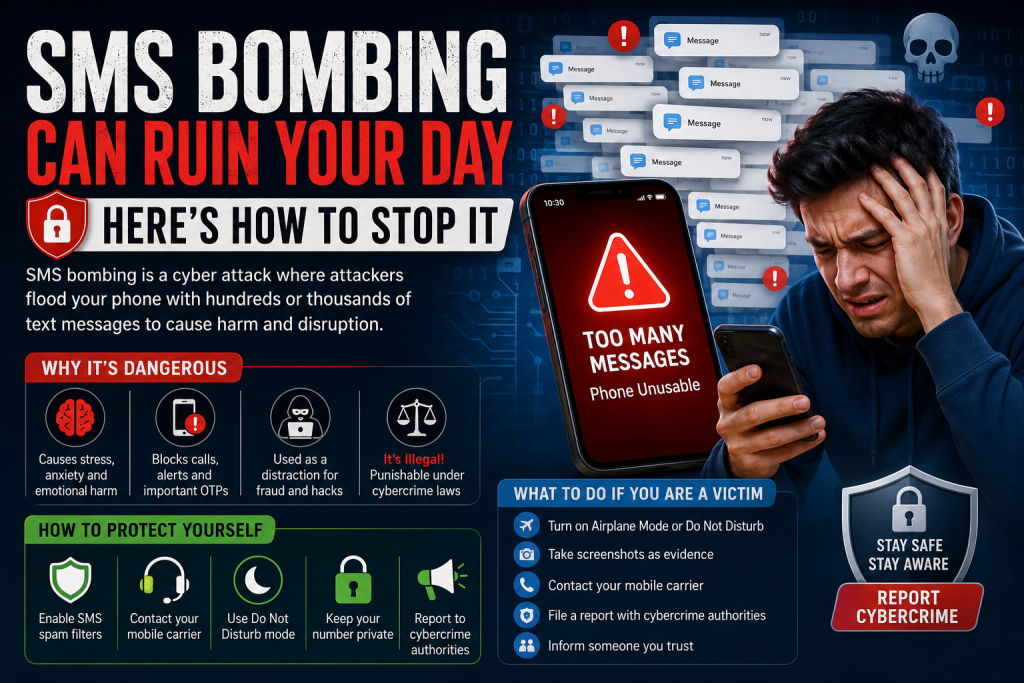
Imagine waking up to find your phone completely frozen, hundreds of meaningless text messages flooding in every second. You cannot make calls, receive important alerts, or even use your device normally. This is not a glitch. This is a SMS Bomber, and it is happening to real people every single day.
SMS bombing is a form of online harassment and cyber attack in which a victim’s phone number is targeted with a massive flood of text messages in a very short period of time. The goal is to overwhelm the victim’s device, disrupt their communication, cause psychological distress, or even create a distraction for a larger fraud scheme happening in the background.
Awareness is the first line of defense. If you do not know what SMS bombing looks like, how it works, and what steps to take, you remain vulnerable. This article breaks it all down in simple terms so you can stay informed and stay protected.
What is SMS Bombing?
SMS bombing, also widely known as an SMS flood attack or SMS spam attack, is the deliberate act of sending thousands of text messages to a single phone number within a very short timeframe. Unlike ordinary spam messages that promote products or phishing links, SMS bombing has one primary purpose: to cause harm and disruption.
Regular spam messages are annoying but manageable. An SMS flood attack, on the other hand, can completely disable a person’s ability to use their phone. Calls cannot get through, important OTPs one-time passwords get buried, and the device itself may slow down or crash entirely. It is a targeted, intentional attack not an accident.
How Does SMS Bombing Work?
Understanding how SMS bombing works at a general level is important for awareness, even if the technical details behind it are misused by bad actors. In simple terms, an attacker uses automated tools or scripts to rapidly send a large volume of text messages to one specific phone number.
These automated scripts exploit publicly available SMS gateway services, sign-up forms with SMS verification, or free messaging APIs to generate a mass surge of texts. Because many legitimate platforms send verification codes via SMS, attackers can trigger hundreds of these services simultaneously to bombard a single victim. This is what makes the cybercrime SMS attack particularly dangerous; it often uses legitimate infrastructure against innocent people.
The attacker does not even need advanced technical knowledge today. Sadly, certain online tools exist that allow anyone to carry out this type of attack with minimal effort. This widespread accessibility is exactly why public awareness about how SMS bombing works has become so critical.
Why is SMS Bombing Dangerous?
The dangers of SMS bombing go far beyond simple inconvenience. The impact hits victims on multiple levels: psychological, practical, and financial.
On a psychological level, receiving hundreds or thousands of unwanted messages in a short time is deeply distressing. It creates panic, anxiety, and a sense of helplessness. Many victims report feeling violated and stalked, especially when the attacker is someone they know personally. This form of online harassment via SMS is increasingly used as a tool of intimidation and cyberbullying.
From a practical standpoint, the victim’s device becomes nearly unusable. Important messages, emergency alerts, and phone calls are completely blocked during the attack. Batteries drain rapidly and some older phones may freeze or crash entirely.
Perhaps most alarming is the use of SMS bombing as a distraction tactic. Cybercriminals sometimes flood a victim’s phone with messages at the exact moment they are attempting to gain unauthorized access to that person’s bank account, email, or social media. By flooding the inbox, they prevent the victim from seeing the OTP or security alert that would otherwise warn them. This connection between SMS bombing and financial fraud makes it one of the more serious cyber threats today.
Is SMS Bombing Illegal?
Yes, in most countries, SMS bombing is considered a cybercrime. Deliberately targeting someone’s device with a flood of messages falls under harassment, unauthorized system disruption, and abuse of communication networks.
In Pakistan, for example, this type of act can be prosecuted under the Prevention of Electronic Crimes Act (PECA) 2016. In other countries, similar digital harassment and network disruption laws apply. Offenders can face heavy fines and even imprisonment. Doing this to someone even as a prank is not a joke. It is a criminal offense.
How to Protect Yourself from SMS Bombing
While no method offers 100% protection, there are several practical SMS bombing prevention tips that can significantly reduce your risk and minimize the damage if an attack occurs:
Enable SMS spam filters:
Most Android and iPhone devices have built-in spam filtering features. Go into your messaging settings and enable the spam protection option to automatically filter suspicious messages.
Contact your mobile carrier:
Call your telecom provider immediately if you are being bombed. Many carriers can temporarily block mass message delivery to your number or help investigate the source of the attack.
Switch your phone to Do Not Disturb mode:
This silences incoming notifications immediately, giving you breathing room to contact authorities and your carrier without being overwhelmed.
Keep your number private:
Avoid sharing your personal phone number publicly on social media, online forums, or untrusted websites. The less exposure your number has, the lower your risk of being targeted.
Report to cybercrime authorities:
Do not suffer in silence. File a formal complaint with your country’s cybercrime reporting authority. In Pakistan, you can report via the FIA Cybercrime Wing portal.
What to Do If You Are a Victim of SMS Bombing
If you are currently experiencing an SMS flood attack, do not panic. Take the following steps immediately:
- Put your phone on airplane mode or Do Not Disturb to stop the incoming message flooding temporarily.
- Take screenshots of the messages as evidence before deleting them. Documentation is critical if you plan to file a legal complaint.
- Contact your mobile carrier and explain the situation. Request a temporary block or number investigation.
- File a formal cybercrime report with the relevant law enforcement authority in your country.
- Inform someone you trust, a family member, employer, or colleague in case the attack is being used as a distraction for a broader fraud attempt.
Conclusion:
SMS bombing is not a harmless prank, it is a serious cybercrime that causes real psychological, financial, and practical harm to victims. Understanding what it is, recognizing how SMS bombing works, and knowing the steps to protect yourself can make a genuine difference when it matters most.
Staying safe in the digital world starts with staying informed. Share this article with your friends and family so they too can recognize and respond to SMS bombing threats. Together, we can build a more aware and resilient online community.
Stay safe. Stay aware. Report cybercrime.