
Boost Inference Speed with a Multi-Model API Platform
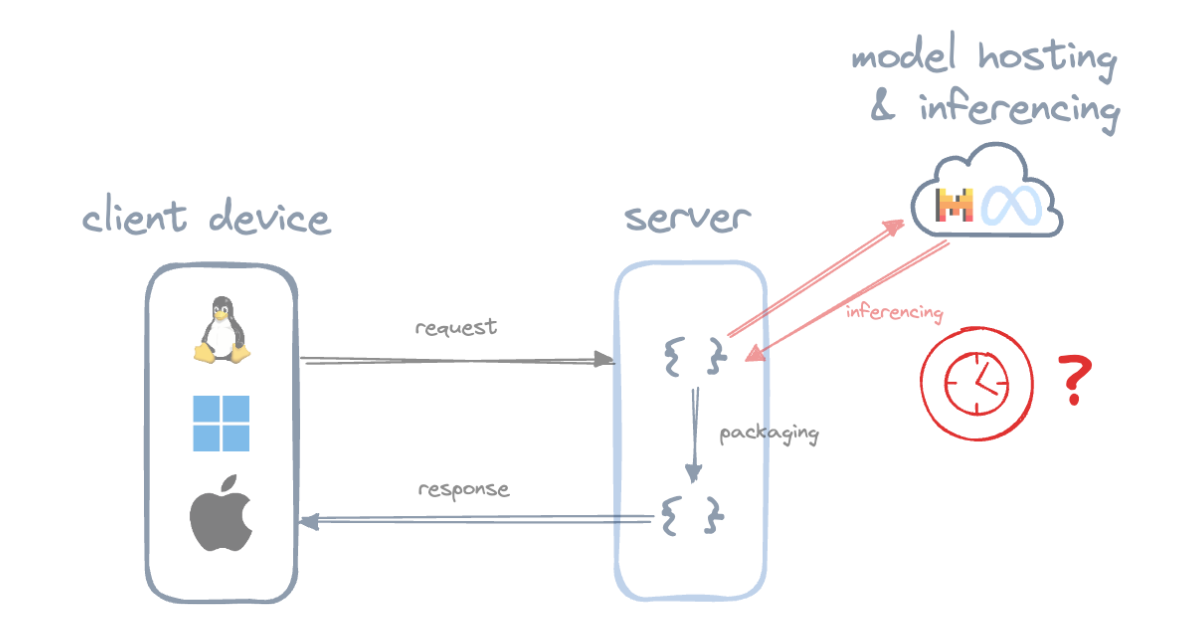
Inference speed has become the defining bottleneck in production AI systems. As applications increasingly rely on large language models, vision transformers, and multimodal architectures, the time it takes to generate a single prediction directly determines whether a product succeeds or fails at scale. Slow inference cascades into degraded user experiences—chatbots that feel sluggish, real-time analytics that arrive too late, and generative tools that frustrate rather than empower. Beyond user satisfaction, inefficient inference inflates compute costs and places hard ceilings on how many concurrent users a system can serve.
A multi-model API platform offers an engineered response to these compounding challenges. Rather than managing disparate model endpoints with inconsistent performance characteristics, this architectural approach consolidates inference workloads behind a unified, optimized layer built on purpose-designed AI Infrastructure. Platforms like SiliconFlow exemplify this approach, providing developers with streamlined access to accelerated inference across diverse model architectures. This article provides a technical deep dive into how such platforms accelerate inference through hardware selection, software optimization, intelligent request handling, and streamlined developer workflows—transforming inference from a liability into a competitive advantage.
The Critical Need for Speed: Why Inference Performance is Non-Negotiable
Inference is the operational phase where a trained AI model processes new input and generates output—a translated sentence, a classified image, a code suggestion, or a multi-step reasoning chain. Unlike training, which happens offline, inference occurs in the critical path of user-facing applications. Two metrics define its performance: latency, the wall-clock time from request submission to response delivery, and throughput, the total number of requests a system can handle per second. When latency exceeds acceptable thresholds—typically 100-500 milliseconds for interactive applications—users disengage. When throughput plateaus, revenue-generating traffic gets rejected or queued.
The cost dimension compounds the urgency. GPU compute billed by the second means every inefficiency in the inference pipeline translates directly to wasted spend. A model that utilizes only 40% of available GPU cycles during inference effectively doubles its per-query cost. Now multiply this challenge across organizations running five, ten, or fifty distinct models simultaneously—each with different memory footprints, computational profiles, and scaling characteristics. Managing these heterogeneous workloads through isolated, manually tuned endpoints becomes operationally untenable. This fragmentation is precisely where a consolidated platform approach transforms scattered inference workloads into a coordinated, high-performance system.
Deconstructing the Multi-Model API Platform: Core Components
A multi-model API platform functions as the central nervous system for AI inference, orchestrating the flow of requests across diverse models while abstracting infrastructure complexity from the teams building on top of it. Understanding its layered architecture reveals how each component contributes to the speed gains that matter in production.
The Unified API Layer: Simplifying Developer Interaction
At the top of the stack sits a single, consistent API endpoint that developers interact with regardless of the underlying model. Whether the request targets a large language model, a vision classifier, or an embedding generator, the call structure remains standardized—same authentication, same request format, same response schema. This eliminates the integration tax of maintaining separate SDKs, credential systems, and error-handling logic for each model provider. For development teams juggling multiple AI capabilities within a single application, this consolidation reduces onboarding time from days to hours and removes an entire category of production bugs caused by endpoint inconsistencies.
The Modal Inference Engine: Heart of the Operation
Beneath the API layer, the modal inference engine handles the computationally intensive work of loading models into memory, executing forward passes, and managing model lifecycle transitions. This specialized subsystem determines which models remain hot in GPU memory, which get swapped to accommodate demand spikes, and how compute resources get allocated across competing workloads. It continuously monitors queue depths and execution times, making real-time scheduling decisions that prevent any single model from monopolizing shared hardware while ensuring latency-sensitive requests receive priority processing.
Foundational AI Infrastructure: Powering the Platform
The entire system rests on AI Infrastructure purpose-built for parallel computation at scale. This means pools of accelerator hardware connected via high-bandwidth, low-latency networking fabrics that enable rapid model distribution and inter-node communication. Storage tiers are optimized for the distinct access patterns of model weights—large sequential reads during loading, minimal disk access during inference. The hardware foundation, particularly GPUs like the NVIDIA H100 with their massive memory bandwidth and dedicated tensor processing units, determines the theoretical ceiling for inference throughput that software optimizations then work to approach.
Achieving End-to-End Optimization: Strategies for Maximum Speed
Raw hardware capability means nothing without the software intelligence to exploit it fully. End-to-end optimization spans the entire inference pipeline—from the moment a request arrives to the instant a response departs—eliminating dead cycles and maximizing useful computation at every stage. For developers building latency-sensitive applications, understanding these optimization layers reveals where the most impactful speed gains originate.
Leveraging Hardware Acceleration: The NVIDIA H100 Advantage
Modern inference workloads are fundamentally matrix multiplication problems. Every attention head computation, every feed-forward layer activation, and every embedding lookup reduces to dense linear algebra operations that general-purpose CPUs handle poorly. The NVIDIA H100’s Tensor Cores execute these matrix operations in dedicated silicon, achieving throughput that generic compute cannot approach. The H100’s fourth-generation Tensor Cores support FP8 precision natively, enabling twice the throughput of FP16 operations while maintaining model accuracy for most inference tasks. Its 80GB of HBM3 memory delivers over 3TB/s of bandwidth, which directly addresses the memory-bound nature of autoregressive token generation in large language models. When a multi-model platform provisions inference on this hardware, models that previously required multiple seconds per response can deliver sub-200ms latency—transforming what’s architecturally possible in real-time applications.
Software-Level Optimizations: Beyond Hardware
Hardware acceleration reaches its potential only when paired with software that eliminates computational waste. Model quantization reduces weight precision from FP32 to FP16, INT8, or even FP4, shrinking memory footprint and accelerating arithmetic without meaningful accuracy degradation for inference tasks. Kernel fusion combines multiple sequential GPU operations—layer normalization followed by activation followed by matrix multiply—into single kernel launches, eliminating memory round-trips between operations. Optimized runtime libraries like TensorRT compile model graphs into hardware-specific execution plans that exploit the exact instruction set and memory hierarchy of the target accelerator. Within a multi-model platform, these optimizations are applied systematically by the modal inference engine rather than requiring each development team to become GPU optimization specialists. The engine automatically selects the optimal precision format, applies graph-level transformations, and caches compiled execution plans so that repeated model invocations skip compilation overhead entirely.
Dynamic Batching and Concurrent Execution
Individual inference requests rarely saturate a modern GPU’s computational capacity. A single query to a 7-billion parameter model might utilize only 15-20% of available FLOPS on an H100, leaving the majority of tensor cores idle. Dynamic batching solves this by collecting multiple incoming requests within a tight time window—typically 5-20 milliseconds—and executing them as a single batched operation. The GPU processes eight or sixteen requests in barely more time than one, multiplying effective throughput without proportional latency increases. Continuous batching extends this further for autoregressive generation: rather than waiting for all sequences in a batch to complete, the engine inserts new requests into available batch slots as individual sequences finish, maintaining consistently high GPU utilization. Combined with concurrent model execution—running distinct models on separate GPU partitions simultaneously using MIG or time-slicing—the platform ensures that diverse workloads coexist without resource contention, delivering both low latency for individual requests and high aggregate throughput across the entire model portfolio.
Implementation Blueprint: Steps for Developers to Integrate and Benefit
Moving from understanding platform architecture to actually deploying it requires a structured approach. The following steps translate the optimization strategies discussed above into concrete actions that development teams can execute against their existing model workloads.
Step 1: Assessing Your Model Portfolio and Performance Requirements
Begin by cataloging every model your application depends on—their architectures, parameter counts, memory requirements, and current inference characteristics. Profile each model under realistic load conditions, measuring P50, P95, and P99 latency alongside sustained throughput. This baseline reveals where performance gaps exist. Next, define explicit SLAs for each workload: a conversational chatbot might require sub-300ms time-to-first-token, while a batch embedding pipeline tolerates multi-second latency but demands high throughput. Identify which models are memory-bound versus compute-bound, as this distinction determines which optimization strategies yield the greatest returns. Document peak concurrent usage patterns—knowing that your vision model spikes at 3x baseline during business hours while your language model sustains steady traffic informs how the platform should allocate resources dynamically.
Step 2: Selecting and Configuring the Platform
Evaluate platforms against your specific model portfolio. Confirm support for every architecture you deploy—transformer variants, diffusion models, encoder-decoder structures—and verify that the platform’s modal inference engine handles your largest model’s memory footprint without degradation. Prioritize platforms offering automatic quantization, continuous batching, and hardware-aware compilation so your team avoids building these capabilities internally. During initial configuration, map your SLA requirements to infrastructure tiers: assign latency-critical models to dedicated GPU partitions while allowing batch workloads to share capacity through time-slicing. Configure autoscaling thresholds based on the queue depth metrics you identified during profiling, ensuring the AI Infrastructure scales proactively rather than reactively.
Step 3: Integration, Deployment, and Monitoring
Connect your applications through the unified API using standardized client libraries, replacing existing model-specific endpoint calls with the platform’s consistent interface. Deploy incrementally—route a percentage of traffic through the platform while maintaining existing endpoints as fallback, comparing latency and accuracy metrics side by side. Once validation confirms parity or improvement, shift traffic fully. Implement real-time monitoring dashboards tracking per-model latency distributions, GPU utilization percentages, batch fill rates, and error frequencies. Set automated alerts when P95 latency exceeds SLA thresholds or when utilization drops below efficiency targets, as both conditions signal optimization opportunities. Review these metrics weekly to identify models that would benefit from updated quantization profiles or adjusted batching windows, treating inference performance as a continuously refined system rather than a one-time configuration.
Turning Inference Performance into a Competitive Advantage
The trajectory of AI adoption makes one thing clear: inference performance is not a secondary concern but the primary determinant of whether AI applications deliver real value at scale. A purpose-built multi-model API platform addresses this challenge holistically, combining a unified API layer that eliminates integration friction, a modal inference engine that intelligently orchestrates model execution, and foundational AI Infrastructure powered by accelerators like the NVIDIA H100 that provide the raw computational muscle these workloads demand.
The synergy between these components is what separates a high-performance inference system from a collection of individually optimized endpoints. Dynamic batching, quantization, kernel fusion, and continuous batching work together within this architecture to squeeze maximum useful computation from every GPU cycle. End-to-end optimization transforms inference from an unpredictable cost center into a precisely tuned system with measurable, improvable characteristics. For developers building the next generation of AI-powered applications—whether real-time conversational agents, multimodal creative tools, or intelligent automation pipelines—mastering this infrastructure stack removes the performance ceiling that would otherwise constrain ambition. The organizations that treat inference as an engineering discipline rather than an afterthought will define what AI applications can achieve.